
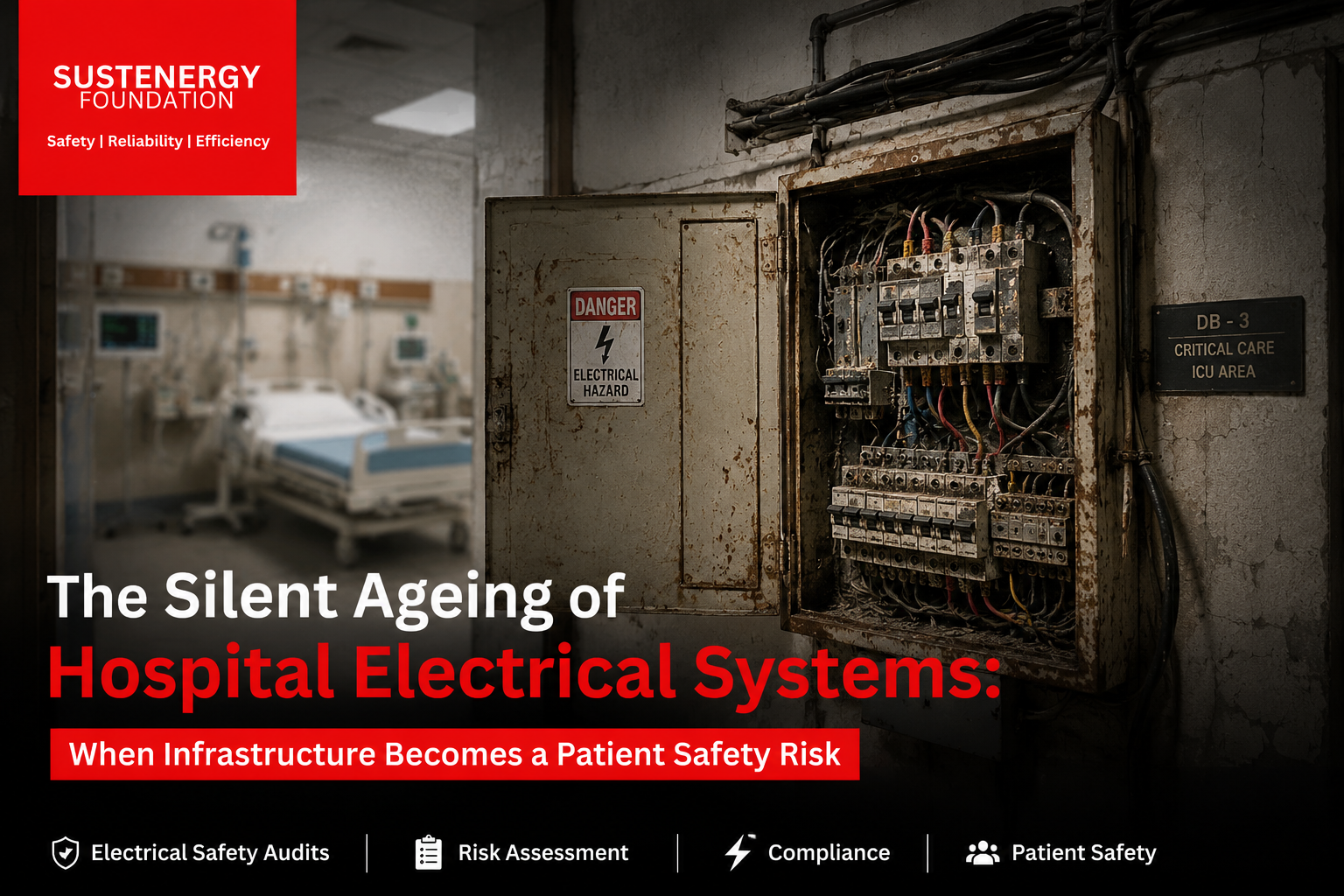
Hospitals proudly showcase advanced MRI scanners, modern ICUs, robotic operation theatres, and cutting-edge patient monitoring systems. Yet behind these life-saving technologies lies an invisible network that makes them all possible—the hospital’s electrical infrastructure.
Hidden inside walls, electrical panels, cable trays, substations, and false ceilings, this infrastructure quietly powers every critical medical service. Unlike medical equipment, however, electrical systems rarely receive attention until something goes wrong. They age silently, and when they fail, the consequences can directly affect patient safety.
A hospital electrical system should never be viewed as just another maintenance asset. It is one of the most critical patient safety systems in any healthcare facility.
Why Ageing Electrical Infrastructure Is a Growing Concern
Many hospitals across India have expanded significantly over the last two decades. Buildings originally designed for 100 beds are now supporting 250 or even 300 beds. New imaging equipment, modular operation theatres, HVAC systems, data centres, and additional intensive care units have dramatically increased electrical demand.
However, the electrical backbone often remains largely unchanged.
Cables that were installed years ago now carry much heavier loads. Distribution boards operate close to their maximum capacity. Transformers, UPS systems, and earthing networks continue working well beyond their intended design life.
Unlike visible equipment failures, electrical deterioration develops gradually:
- Cable insulation weakens over time.
- Electrical connections loosen due to thermal cycling.
- Earthing resistance increases.
- Protective devices lose calibration.
- Distribution panels become overloaded.
None of these issues may be visible during daily hospital operations. But together, they significantly increase the risk of electrical faults, equipment damage, power interruptions, and even fires.
This is precisely why Hospital Electrical Safety Audits have become an essential component of modern healthcare risk management.
Electrical Failures Rarely Happen Overnight
One of the biggest misconceptions is that major electrical incidents occur suddenly.
In reality, most failures develop slowly through years of deferred maintenance and postponed upgrades.
What often appears to be a “sudden” electrical failure is usually the final result of multiple unnoticed warning signs, including:
- Overloaded circuits
- High earth fault loop impedance
- Deteriorated insulation
- Poor cable terminations
- Inadequate earthing
- Repeated overheating inside electrical panels
These conditions remain hidden until a breaker trips during surgery, a UPS fails unexpectedly, or an electrical fire breaks out.
Preventing such incidents requires a culture of continual improvement, not reactive maintenance.
Preventive Maintenance Is Far Safer Than Emergency Repairs
Every hospital engineering department understands that planned maintenance requires temporary shutdowns.
Unfortunately, obtaining approval for shutdowns is often difficult.
Administrators naturally worry about disrupting patient care, so many maintenance activities get postponed repeatedly.
The unintended result is that critical electrical components continue operating with known defects.
A planned two-hour shutdown to replace an ageing panel or inspect a transformer may seem inconvenient.
An unplanned power failure during an emergency procedure is far more disruptive—and potentially life-threatening.
Hospitals that prioritise electrical safety compliance solve this challenge through proper system design by implementing:
- Parallel power feeders
- Redundant transformers
- Reliable UPS systems
- Automatic Transfer Switches (ATS)
- Planned shutdown schedules
- Phased maintenance windows
These strategies allow maintenance to be completed without compromising patient care.
Compliance on Paper Doesn’t Always Mean Safety on the Ground
Most hospitals are originally designed to comply with Indian Standards, NABH requirements, and international electrical safety practices.
However, over time, operational pressures often lead to temporary modifications that eventually become permanent.
Examples include:
- Bypassing protective devices
- Bridging blown fuses
- Using undersized extension wiring
- Ignoring earthing defects
- Installing additional loads without redesigning distribution systems
- Temporary cable routing becoming permanent installations
These “quick fixes” may solve immediate operational challenges, but they gradually reduce the overall safety and reliability of the electrical system.
A hospital may appear compliant during documentation reviews while hidden electrical risks continue to exist behind the scenes.
This is why an independent Electrical Safety Audit for Hospitals is far more effective than relying solely on routine maintenance inspections.
The Human Factor: Experience Needs Continuous Learning
Another overlooked challenge is the growing skills gap within hospital maintenance teams.
Many hospitals rely on highly experienced technicians who have spent decades maintaining electrical systems.
Their practical knowledge is invaluable.
However, modern hospitals are becoming increasingly complex.
Today’s healthcare facilities include:
- High-capacity UPS systems
- Medical IT infrastructure
- Modular operation theatres
- Advanced imaging equipment
- Smart Building Management Systems (BMS)
- Energy-efficient electrical installations
- Sophisticated electrical protection systems
Managing these technologies requires continuous training on updated standards, electrical testing techniques, and evolving regulations.
Experience alone cannot replace formal education in current electrical safety practices.
Hospitals that invest in ongoing technical training significantly reduce operational risks while improving compliance with modern safety requirements.
What a Safe Hospital Electrical System Looks Like
Hospitals with mature electrical safety programmes typically follow a structured approach rather than waiting for failures.
Key best practices include:
Scheduled Preventive Shutdowns
Electrical maintenance is planned well in advance and integrated into the annual maintenance calendar.
Regular Hospital Electrical Safety Audits
Independent third-party audits help identify hidden risks before they become major incidents.
Zero Tolerance for Temporary Repairs
Every temporary workaround has a documented replacement plan and defined completion timeline.
Continuous Technical Training
Electrical maintenance personnel receive regular updates on new technologies, safety standards, and testing procedures.
Reliable Redundant Power Systems
Critical medical services continue operating safely even during maintenance or equipment failures.
Routine Electrical Testing
Hospitals should regularly perform:
- Earth resistance testing
- Earth fault loop impedance testing
- RCD testing
- Insulation resistance testing
- Thermographic inspections
- Load analysis
- Power quality monitoring
These tests provide early warning signs of deteriorating infrastructure.
Electrical Safety Is a Core Part of Patient Safety
Healthcare organisations invest heavily in infection control, clinical governance, and patient care protocols.
Electrical safety deserves the same level of attention.
Every ventilator, infusion pump, surgical light, CT scanner, MRI system, and ICU monitor depends entirely on a reliable electrical supply.
When electrical infrastructure fails, clinical care is immediately affected.
That is why hospital electrical safety is not simply an engineering responsibility—it is a patient safety responsibility.
The Role of Hospital Electrical Safety Audits
A professional Hospital Electrical Safety Audit evaluates the overall health of a healthcare facility’s electrical infrastructure.
A comprehensive audit typically includes:
- Visual inspection of electrical installations
- Earth fault loop impedance testing
- Earthing system evaluation
- Insulation resistance testing
- RCD performance testing
- Transformer assessment
- UPS and DG backup verification
- Thermal imaging of electrical panels
- Load balancing analysis
- Compliance review against applicable standards
These assessments help hospitals identify hidden hazards, prioritise corrective actions, improve reliability, and reduce the likelihood of electrical incidents.
Conclusion
Hospital electrical infrastructure continues ageing every single day—whether anyone notices it or not.
The real question is whether hospitals choose to manage that ageing through planned maintenance, regular Electrical Safety Audits, and continual improvement, or wait until an unexpected failure exposes years of hidden deterioration.
Patient safety doesn’t end at the bedside.
It begins with every cable, every distribution board, every protective device, and every electrical connection hidden behind the walls.
Hospitals that invest in Hospital Electrical Safety Audits, preventive maintenance, electrical testing, and continual improvement are not simply maintaining infrastructure—they are protecting lives.