
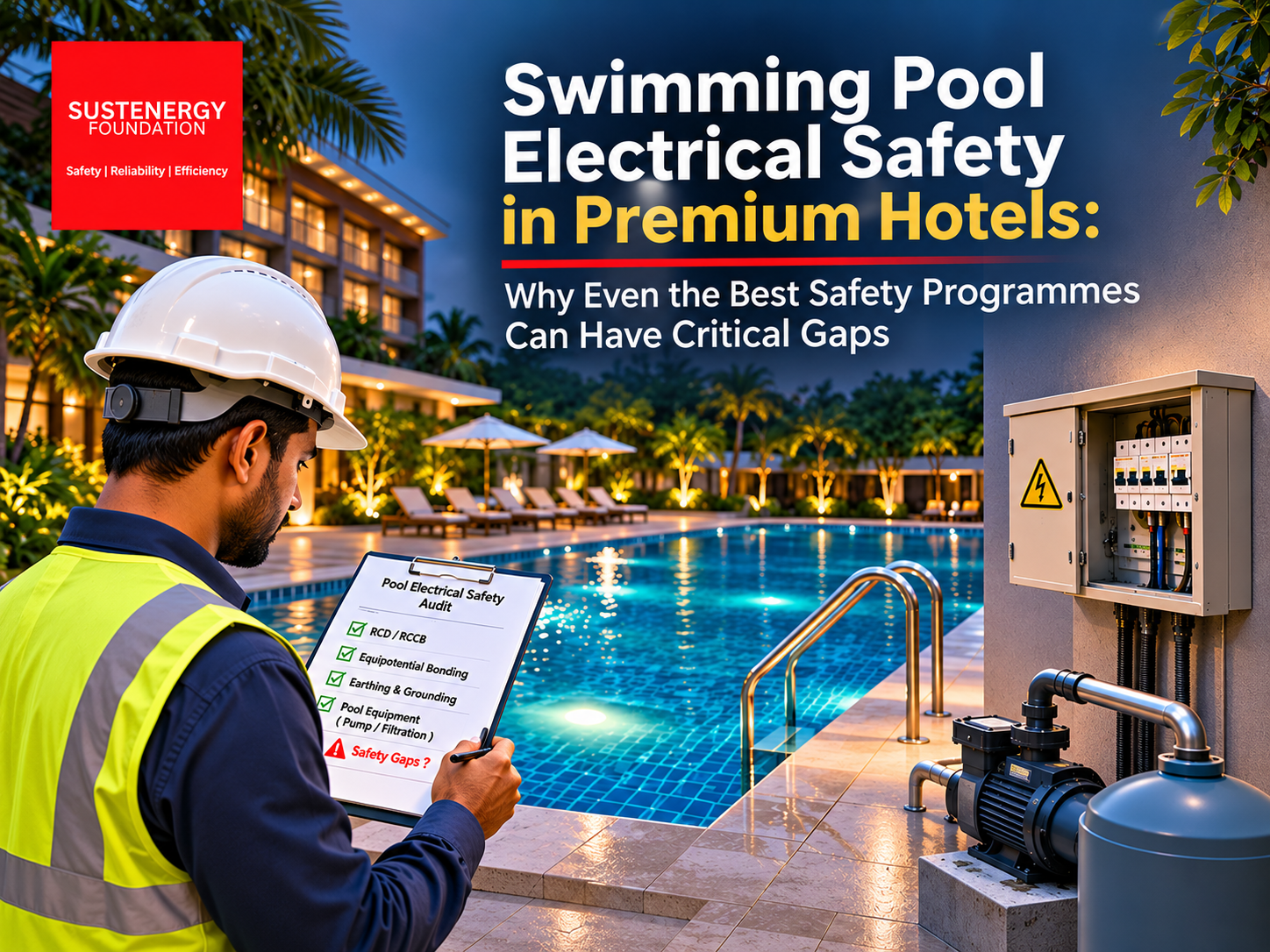
A hotel pool is meant to feel effortless. Cool water, soft lighting, a lounger in the sun. But under that calm surface sits a surprisingly complex setup: water, live electrical equipment, metal fittings and people, all in the same small space.
When a suspected electrocution happens at a luxury hotel pool, it forces an uncomfortable truth into the open. A five-star rating, a famous brand name and a thick folder of safety procedures do not automatically make a pool safe. Swimming pool electrical safety has to be proven, not assumed.
The danger is also unusually sharp. If a fault puts hazardous voltage into the water or onto a metal surface, swimmers often have almost no time to realise what is happening, let alone get out.
Why Is a Swimming Pool So Electrically Risky?
Most rooms in a building have one or two electrical concerns. A pool area has many, packed close together and right next to people. Think of underwater lights, circulation pumps, filters, heaters, chemical dosing units, metal ladders, handrails and drain covers.
The main trouble spots include:
- Underwater lights and their transformers or drivers
- Pumps, heaters and filtration equipment
- Metal ladders, handrails, drains and grilles
- Electrical panels, sockets and deck equipment
- Old cables, worn insulation and water getting where it shouldn’t
- Quick repairs and unapproved modifications
One damaged cable, one faulty pump or one loose earthing connection is enough to turn a pool into a hazard. That is why electrical safety here should be treated as a critical operating requirement, not just another line on the maintenance list.
So Why Do Good Hotel Safety Programmes Still Fall Short?
Most premium hotels do have preventive maintenance plans, engineering checklists, regular inspections and outside audits. On paper, that looks reassuring. In practice, having a system and having a system that actually works are two different things.
Here are the gaps that get missed most often:
- Not enough real testing. Walk-around inspections and yearly audits are useful, but they can’t replace regular electrical safety testing of RCDs, insulation resistance and earth continuity.
- Broken bonding after a repair. When an underwater light, pump or metal fitting is swapped out, a bonding conductor can quietly end up disconnected. That creates dangerous voltage differences nobody notices.
- RCDs that exist but don’t perform. Fitting an RCD isn’t enough. Its real tripping performance needs checking with a calibrated tester.
- Repairs with no independent check. After a breakdown or renovation, work is sometimes signed off without proper testing and commissioning.
- Equipment in the wrong place. Switches, sockets and other gear can end up in spots where water and human contact make them unacceptable risks.
Four Safety Measures That Matter Most
1. Equipotential Bonding
Equipotential bonding means connecting all relevant metal parts around the pool, so they sit at the same electrical potential. That covers ladders, handrails, pool equipment, metal pipework and other conductive elements, as required by the applicable standards.
The goal is simple: if someone touches two metal parts at once, there shouldn’t be a dangerous voltage between them.
2. RCD/RCCB Protection
Pool circuits need properly selected residual current devices, as the standards require. A 30 mA RCD is commonly used as additional protection in pool installations.
Pressing the test button is a start, not a finish. RCD testing with a calibrated instrument should confirm the real tripping time and operating current, and the results should be written down.
3. Safe Underwater Lighting
Underwater pool lighting should preferably run on Safety Extra-Low Voltage (SELV), typically 12 V, fed from a suitable safety isolating transformer in a permitted location.
Check cable insulation, waterproof housings, IP ratings, cable glands and the transformer setup thoroughly. These are small details with big consequences.
4. Electrical Zone Compliance
Every pool installation has to respect the applicable pool electrical zones. What equipment is allowed, where it goes and how it’s protected all depend on the zone.
And please verify on site. Old drawings can’t be treated as proof that things still match reality.
A Practical Audit Schedule
| Frequency | What to do |
| Daily | Visual check of fittings, cables, leaks and corrosion |
| Weekly | RCD test-button checks and a look over pool equipment |
| Monthly | Review bonding connections and maintenance records |
| Quarterly | Calibrated RCD testing, earth continuity testing and thermal scanning |
| Annually | Full independent electrical safety audit |
| After any repair | Mandatory testing and commissioning before reopening |
Intervals should also reflect the relevant standards, manufacturer instructions, operating conditions and your own risk assessment.
From Paperwork to Proof
Hotels should build a dedicated electrical safety management programme for the pool. It should include:
- Pool-specific single-line diagrams and zone drawings
- Bonding inspection records
- RCD test certificates and earth continuity readings
- Regular insulation resistance testing and earth-fault protection checks
- Permit-to-work and lockout-tagout procedures
- Independent verification after every electrical repair
- Emergency isolation and rescue protocols
- A fresh safety reassessment after any renovation
Lifeguards and engineering staff need real training too. They should be able to spot electrical hazards, cut the power and start an emergency response, all without putting themselves in danger.
The Question Hotel Management Should Be Asking
Not “Do we have an electrical safety programme?”
Ask this instead:
“Can we show, with current and verifiable test records, that our pool electrical installations are safe, and that protective devices will disconnect the supply in time if a fault happens?”
Safety isn’t created by certificates, checklists or a famous name. It comes from sound design, competent installation, working protection, regular testing and independent verification. That is the heart of good hotel electrical safety, and it is also part of building sustainable energy solutions that protect people as well as power bills.
A great guest experience is built on luxury and hospitality, yes. But it also rests on the invisible engineering that keeps every guest safe. One overlooked connection, one failed protective device or one unverified repair can change everything, permanently.