
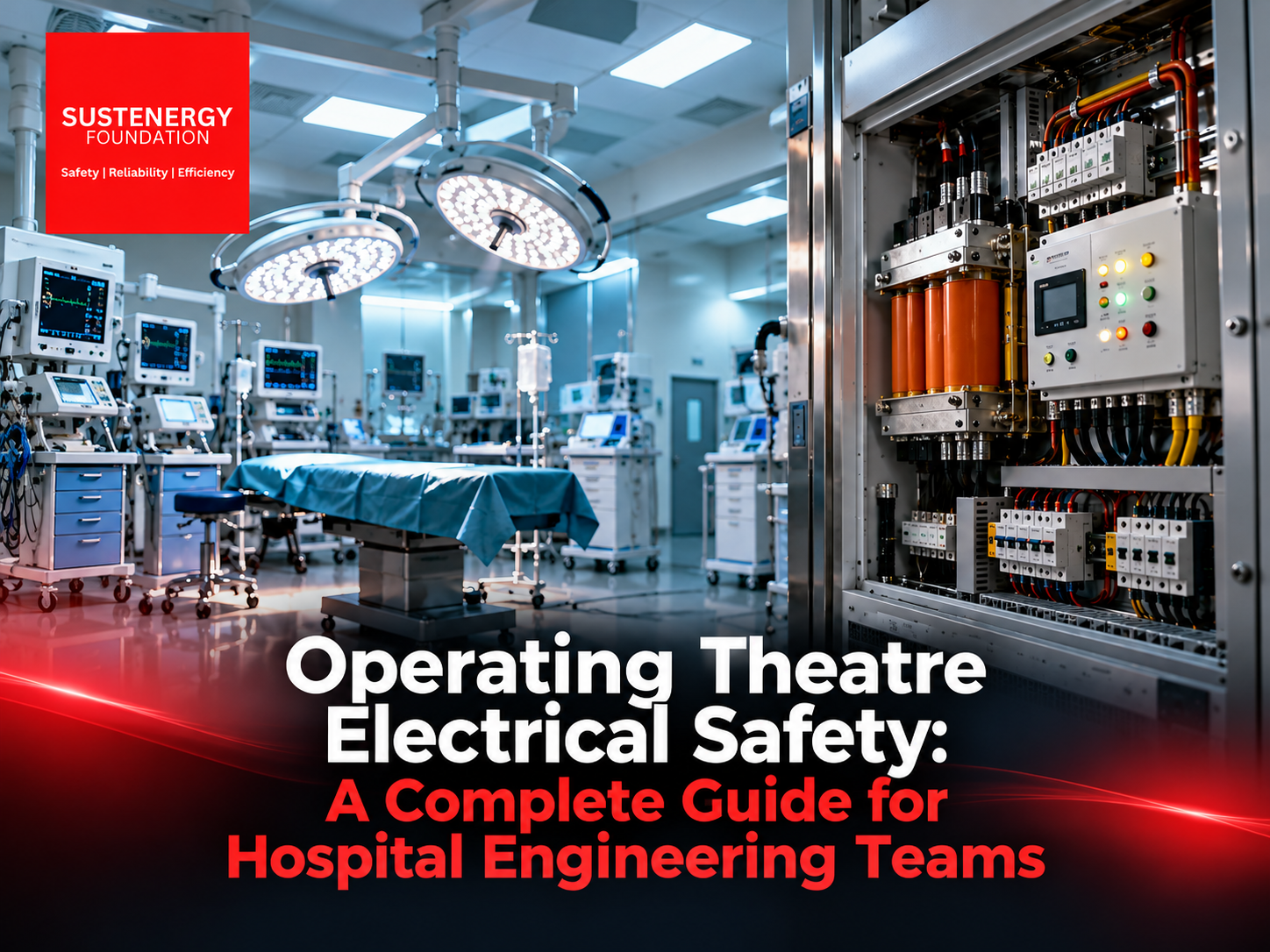
Operating theatre electrical safety is one of the most important aspects of hospital infrastructure management. Every day, operating theatres (OTs) depend on a reliable electrical supply to power anaesthesia workstations, patient monitors, electrosurgical units, infusion pumps, surgical lights and other critical medical equipment.
Behind every successful surgical procedure is an engineering system that must work safely and reliably. Even a small electrical fault, insulation failure or unexpected power interruption can create serious risks for patients and healthcare professionals.
This is why hospital engineering teams need a well-planned approach to OT electrical safety, Medical IT systems, protective earthing, emergency power supply and preventive maintenance.
In this guide, we explore the key electrical safety requirements for operating theatres, the role of Medical IT systems and the practical checks hospital engineers should include in their electrical safety inspection programme.
1. Why Is Electrical Safety Important in Operating Theatres?
Operating theatres are among the most electrically sensitive areas in a hospital. Multiple medical devices may be connected to a patient simultaneously, while surgical procedures often involve equipment that must operate continuously.
Unlike patients in general wards, patients under anaesthesia cannot recognise or respond to an electrical hazard. This makes effective electrical protection particularly important.
Some of the common electrical risks in operating theatres include:
- Electric shock: Faulty equipment, damaged insulation or defective protective conductors can expose patients and healthcare workers to electrical hazards.
- Insulation failure: Deterioration of cables, wiring or medical equipment can cause leakage currents and other electrical faults.
- Electrical fire: Loose connections, overloaded circuits and deteriorating electrical components can increase the risk of overheating and fire.
- Power interruption: Failure of the normal supply, UPS or emergency generator can affect critical medical equipment.
- Improper earthing and bonding: Inadequate protective earthing or equipotential bonding can increase the risk of dangerous touch voltages.
- Equipment malfunction: Voltage fluctuations, electrical disturbances and electromagnetic interference may affect sensitive medical equipment.
A properly designed electrical installation, supported by regular testing and maintenance, helps reduce these risks. A professional hospital electrical safety audit can also identify hidden defects that may not be detected during routine maintenance.
2. Medical IT Systems: A Key Part of Operating Theatre Electrical Safety
One of the most important topics in operating theatre electrical safety is the Medical IT system, also known as a medical isolated power system.
A Medical IT system is designed for specific medical locations where continuity of electrical supply is particularly important. Its design and application depend on the classification of the medical location and the applicable electrical safety requirements.
Unlike a conventional earthed distribution arrangement, the secondary circuit of a Medical IT system is isolated from earth. Under the intended operating conditions, the first insulation fault generally does not cause an automatic disconnection, allowing the electrical supply to continue while an alarm alerts the responsible personnel.
This helps reduce the risk of an unexpected interruption to critical medical equipment. However, the first fault must be investigated and corrected promptly.
Key components of a Medical IT system
Medical isolation transformer
The isolation transformer provides the required electrical separation between the primary supply and the secondary circuit. Engineers should verify its rating, installation, ventilation, temperature monitoring and suitability for the intended medical application.
Insulation Monitoring Device (IMD)
The IMD continuously monitors the insulation condition of the isolated circuit. Its correct operation is essential for identifying insulation deterioration and the first insulation fault.
Medical IT alarm panel
The alarm panel provides visual and audible indications when specified fault conditions occur. It should be installed in a location where the responsible clinical or technical personnel can readily observe the alarms and respond appropriately.
Protective conductors and equipotential bonding
Protective earthing and equipotential bonding remain essential safety measures. The Medical IT system does not eliminate the need for protective conductors or appropriate bonding of relevant conductive parts.
Dedicated distribution and circuit identification
The distribution arrangement should be designed for the intended medical location, with appropriate circuit identification and segregation. Unauthorised connections or modifications must be avoided.
What should engineers do when a Medical IT alarm activates?
An insulation monitoring alarm should never be ignored simply because the electrical supply is still available.
The engineering team should follow an approved response procedure:
- Inform the designated clinical and technical personnel.
- Assess the situation and follow the hospital’s approved fault-response procedure.
- Identify the affected circuit and investigate the insulation fault using suitable methods.
- Arrange corrective action through competent personnel without compromising patient care.
- Record the fault, corrective measures and verification results.
Important: Never silence an alarm or reset it without understanding the cause. Any testing or fault-finding must follow the approved procedure and account for the risks associated with equipment connected to patients.
3. Earthing and Equipotential Bonding in Operating Theatres
Proper earthing and equipotential bonding are fundamental to hospital electrical safety.
In an operating theatre, several conductive items may be present around the patient, including operating tables, medical pendants, equipment enclosures and other conductive components. A defect in the protective earthing system or an inadequate bonding connection may create an electrical hazard.
Hospital engineering teams should pay particular attention to:
- Protective conductor continuity.
- Earthing connections at electrical distribution boards and socket outlets.
- Equipotential bonding connections required for the medical location.
- Electrical connections associated with operating tables and medical pendants.
- Socket outlet condition, identification and circuit allocation.
- Accessible conductive parts and relevant extraneous conductive parts.
- Documentation of test results and corrective actions.
The inspection should confirm that the installation meets the requirements applicable to its design and medical location classification.
Are RCCBs required in every operating theatre circuit?
Not necessarily. The selection and application of residual current devices (RCDs), including RCCBs and RCBOs, must be based on the circuit design, medical location classification and applicable standards.
Medical IT circuits require particular attention because indiscriminate application of conventional protective arrangements can conflict with the intended design of the isolated supply system.
Engineers should therefore assess protective devices as part of the complete electrical protection scheme rather than adding or removing them without a technical review.
4. Reliable Power Supply, UPS and Emergency Backup Systems
An operating theatre requires a dependable electrical supply to support essential medical equipment and critical clinical activities.
A hospital’s electrical safety plan should consider the coordination of the normal power supply, emergency generator, UPS system and automatic transfer arrangements.
The exact backup configuration will depend on the medical equipment, clinical risk assessment, required continuity of supply and applicable standards.
Essential checks for OT backup power
UPS system performance: Check UPS alarms, operating condition, battery health, autonomy and maintenance records. Verify that the system can support its designated loads for the required period.
Emergency generator: Review generator readiness, starting arrangements, maintenance records and performance under appropriate load-testing conditions.
Automatic transfer arrangements: Verify the operation of automatic transfer switches and associated controls through approved testing procedures.
Critical load identification: Confirm which equipment requires uninterrupted or emergency power and ensure the distribution arrangement reflects those requirements.
Power quality: Investigate voltage variations, harmonics and other disturbances where they may affect sensitive medical equipment.
Emergency procedures: Ensure that engineering and clinical teams understand their responsibilities during power interruptions.
Testing must be carefully planned so that critical clinical activities are not exposed to unnecessary risks. Any planned interruption should follow the hospital’s approved procedure and coordination requirements.
5. Operating Theatre Electrical Safety Inspection Checklist
A structured OT electrical safety inspection checklist helps engineering teams organise inspections, document findings and track corrective actions.
The following checklist can be used as a starting point for a hospital’s preventive maintenance programme. It should be adapted to the installation, medical location classification, manufacturers’ instructions and applicable standards.
Medical IT system
- Verify the isolation transformer installation and suitability.
- Check the insulation monitoring device and associated indicators.
- Function-test visual and audible alarms using the approved procedure.
- Review alarm response procedures and fault records.
- Inspect circuit identification and distribution arrangements.
Earthing and electrical protection
- Verify protective conductor continuity.
- Inspect relevant equipotential bonding connections.
- Examine socket outlets, plugs and electrical connections for damage.
- Review the suitability and coordination of protective devices.
- Check distribution boards for loose connections, overheating and other visible defects.
Emergency power supply
- Review UPS alarms, battery condition and autonomy test records.
- Verify emergency generator maintenance and test records.
- Assess automatic changeover arrangements.
- Confirm the allocation of critical loads to the appropriate power sources.
Medical equipment and cabling
- Inspect flexible cables, plugs and connectors for physical damage.
- Check equipment for visible signs of overheating or deterioration.
- Verify that equipment inspections and electrical safety tests are documented.
- Confirm that damaged equipment is managed according to the hospital’s approved process.
Documentation and corrective actions
- Review electrical single-line diagrams and circuit schedules.
- Confirm that maintenance records are up to date.
- Record inspection results and test measurements.
- Assign responsibility and target dates for corrective actions.
- Verify that identified defects have been rectified and closed out.
A checklist supports consistent inspection, but it does not replace the detailed testing and engineering assessment required for a comprehensive hospital electrical safety audit.
6. Preventive Maintenance and Periodic Electrical Testing
Preventive maintenance helps identify electrical defects before they develop into serious failures. In operating theatres, this is especially important because electrical problems can affect both patient safety and the continuity of clinical services.
A well-planned OT electrical maintenance programme should cover:
- Periodic functional testing of Medical IT alarms.
- Inspection and testing of protective earthing and equipotential bonding.
- Examination of electrical panels, circuit breakers and connections.
- Inspection of socket outlets, plugs and medical equipment cables.
- UPS battery inspections and appropriate autonomy testing.
- Emergency generator and automatic transfer system testing.
- Thermal imaging of relevant electrical panels and connections.
- Review of previous audit findings and outstanding corrective actions.
Thermography can help identify abnormal heating associated with loose connections, overloaded components and other developing defects. However, thermal imaging should be interpreted alongside other inspection findings and electrical measurements.
Testing intervals should be determined by risk assessment, applicable requirements, equipment manufacturers’ recommendations and the hospital’s maintenance policy. There is no single interval that is appropriate for every component in every operating theatre.
7. Electrical Safety Standards for Operating Theatres in India
Hospital engineering teams should ensure that the design, operation, testing and maintenance of OT electrical systems align with the standards and regulations applicable to their facility.
Important references include:
- IEC 60364-7-710: Electrical installations in medical locations.
- IEC 60601 series: Safety and essential performance requirements for applicable medical electrical equipment.
- IS 732: Code of practice for electrical wiring installations, subject to the applicable edition and scope.
- IS 3043: Code of practice for earthing, subject to the applicable edition and scope.
- Applicable CEA safety regulations and Indian electrical requirements.
- Relevant NABH accreditation requirements applicable to the hospital and its scope of services.
The engineering team should confirm the current applicable editions, Indian adoptions and regulatory requirements before using these references to establish compliance.
Compliance is not simply a matter of maintaining documents. It also requires a technically sound installation, competent personnel, appropriate testing, effective maintenance and evidence that identified defects have been addressed.
8. Training and Coordination Between Hospital Departments
Operating theatre electrical safety is not solely the responsibility of the electrical maintenance team.
Biomedical engineers, electrical engineers, facility managers, anaesthesia teams, nursing personnel and hospital administrators all contribute to maintaining a safe clinical environment.
A coordinated approach should ensure that:
- Clinical personnel know how to report electrical faults and alarms.
- Engineering teams respond to faults through an approved escalation process.
- Biomedical and electrical teams coordinate equipment testing and repairs.
- Planned maintenance is scheduled with clinical teams.
- Electrical isolation and permit-to-work procedures are followed.
- Staff receive appropriate training on emergency response and electrical hazards.
Only competent and authorised personnel should carry out electrical testing, repairs or modifications. Work should be planned to protect patients, staff and the reliability of critical medical services.
9. Why Is a Hospital Electrical Safety Audit Important for Operating Theatres?
Routine maintenance is essential, but it may not identify every weakness in an electrical installation. A dedicated hospital electrical safety audit provides a broader assessment of electrical hazards, protective systems, operational reliability and maintenance practices.
For operating theatres, an audit may examine:
- Medical IT systems and insulation monitoring.
- Protective earthing and equipotential bonding.
- Electrical distribution boards and protective devices.
- UPS systems and emergency power arrangements.
- Electrical fire risks and abnormal heating.
- Circuit identification and electrical drawings.
- Testing records, maintenance practices and corrective actions.
The findings can help hospital management prioritise improvements based on risk, technical requirements and operational needs.
At Sustenergy Foundation, our focus on hospital electrical safety audits supports healthcare facilities in identifying electrical risks, improving system reliability and strengthening safety practices across critical clinical areas.
Learn more about our Hospital Electrical Safety Audit Services and how a structured engineering assessment can support a safer healthcare environment.
Conclusion: Make Operating Theatre Electrical Safety a Priority
Operating theatre electrical safety involves much more than maintaining wiring and ensuring that backup power is available. It requires a coordinated approach to Medical IT systems, insulation monitoring, protective earthing, equipotential bonding, emergency power, preventive maintenance and staff training.
For hospital engineering teams, the most effective approach is to identify risks early, follow approved testing procedures, maintain accurate records and ensure that corrective actions are completed promptly.
A systematic operating theatre electrical safety audit can help uncover hidden defects, improve electrical reliability and support patient safety.
Safe electrical systems are an essential part of safe healthcare. By strengthening inspection, maintenance and engineering practices, hospitals can help protect patients, healthcare professionals and the critical equipment on which clinical care depends.
Need an Electrical Safety Audit for Your Hospital?
Sustenergy Foundation supports healthcare facilities through professional hospital electrical safety audits designed to identify electrical hazards and improve system reliability.
Visit hospitalelectricalsafety.com to learn more about our services.
Contact: +91 8075 16 8075