
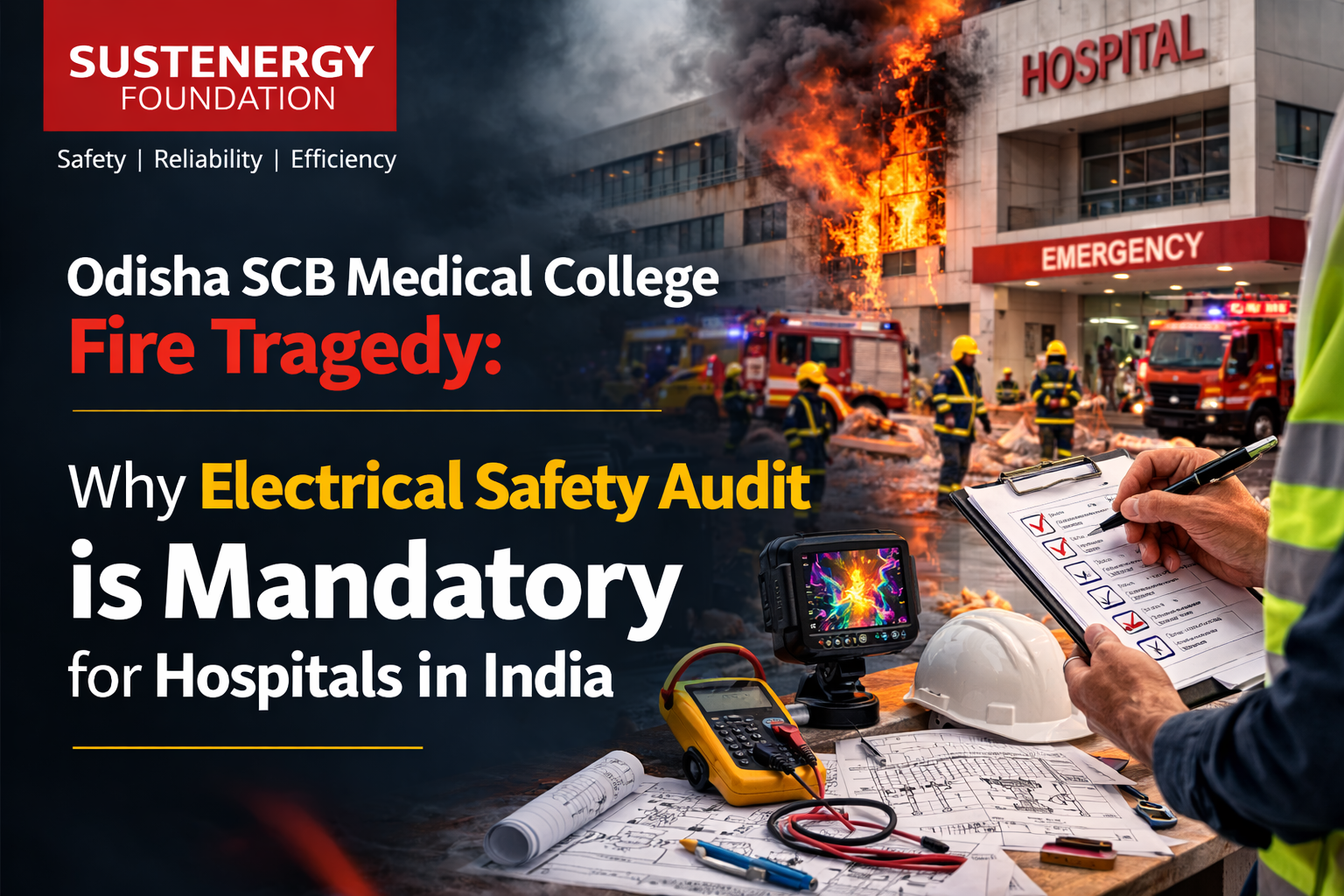
On 16 March 2026, a tragic fire at SCB Medical College and Hospital in Cuttack, Odisha shocked the entire nation. The incident resulted in the death of at least 10 patients and injuries to several hospital staff members after a fire broke out in the Trauma Care ICU during the early morning hours, when many patients were on ventilators and oxygen support, making evacuation extremely difficult.
This heartbreaking incident once again proves a harsh reality —
lack of proper hospital electrical safety, fire protection systems, and periodic safety audits can turn life-saving facilities into high-risk zones.
Hospitals are among the most sensitive buildings where electrical failure can directly lead to loss of life.
This is why Hospital Electrical Safety Audit, Fire Safety Audit, and NABH-compliant inspection are essential for every healthcare facility in India.
This article explains the incident, its lessons, and why regular safety audits through
Sustenergy Foundation
are critical for preventing such disasters.
What Happened at SCB Medical College Fire Incident
According to reports, the fire started in the Trauma Care Intensive Care Unit (ICU) around 2:30–3:00 AM. Rescue teams responded quickly, but many patients were on life-support equipment, making evacuation difficult.
Key facts from the incident
- 10 patients lost their lives
- Multiple staff members suffered injuries
- Fire started in ICU – a high-risk electrical zone
- Possible electrical fault under investigation
- Safety compliance issues suspected
Hospital fires in India are not new.
Past incidents include:
- Jhansi Medical College Fire (2024)
- AMRI Hospital Fire (2011)
- Several ICU fire accidents across India
Most of these incidents were linked to:
- Electrical faults
- Overloaded panels
- Poor earthing
- Lack of maintenance
- Absence of electrical safety audit
These tragedies clearly show:
Regular Hospital Electrical Safety Audit could prevent many fire accidents.
Why Hospitals Are the Highest Risk Buildings for Electrical Fire
Hospitals have one of the most complex electrical systems compared to any other building.
High-risk electrical areas in hospitals
- ICU / NICU / OT
- Oxygen supply systems
- UPS & backup power
- Generator panels
- HVAC & AHU systems
- CSSD & laundry
- Kitchen & boiler area
- Medical equipment rooms
- Server & control panels
In hospitals:
- Equipment runs 24×7
- Load changes frequently
- Sensitive equipment needs stable power
- Patients cannot evacuate easily
Even a small electrical fault can cause a major disaster.
This is why Hospital Electrical Safety Audit is mandatory as per safety guidelines, NABH, NBC, and CEA regulations.
Importance of Hospital Electrical Safety Audit
A Hospital Electrical Safety Audit is a detailed inspection of the complete electrical system to identify risks before accidents occur.
Electrical safety audit includes
- Panel inspection
- Load analysis
- Earthing test
- Insulation resistance test
- Thermal scanning
- Cable condition check
- UPS & generator inspection
- ICU & OT electrical safety check
- Compliance verification
Benefits
- Prevent fire accidents
- Protect patients on life support
- Avoid equipment damage
- Ensure NABH compliance
- Improve reliability of power system
- Reduce downtime
For hospitals, electrical safety is not only about compliance —
it is about saving lives.
NABH Requirement for Electrical Safety in Hospitals
NABH guidelines require hospitals to ensure:
- Regular electrical inspection
- Preventive maintenance
- Proper earthing system
- Fire safety compliance
- Backup power reliability
- Documentation of safety checks
Failure to conduct safety audits can lead to:
- Loss of accreditation
- Legal issues
- Fire accidents
- Patient risk
This is why hospitals across India are now conducting annual electrical safety audits.
How Sustenergy Foundation Helps Hospitals Stay Safe
Sustenergy Foundation – Best Electrical Safety Audit Firm in India specializes in safety audits for healthcare facilities.
Services for hospitals
- Hospital Electrical Safety Audit
- NABH Electrical Compliance Audit
- Fire Safety Audit
- Energy Audit for Hospitals
- Thermography Inspection
- ICU / OT Electrical Safety Check
- Earthing & Lightning Protection Testing
- Risk Assessment & Safety Reporting
Services provided for:
- Hospitals
- Medical Colleges
- Clinics
- Diagnostic Centers
- Multi-specialty hospitals
- Government hospitals
- Private hospitals
- Healthcare campuses
Professional audits help hospitals detect risks early and prevent accidents before they happen.
A Wake-Up Call for Every Hospital Owner
The SCB Medical College fire is not just news.
It is a warning for every:
- Hospital owner
- Facility manager
- Biomedical engineer
- Electrical engineer
- Safety officer
- NABH coordinator
Ignoring electrical safety can cost lives.
Regular audit can save lives.
Quick Recap
The tragic fire at SCB Medical College reminds us that safety cannot be taken lightly in hospitals.
- Electrical Safety Audit must be done every year
- ICU and OT electrical systems must be inspected
- Fire safety and earthing must be checked regularly
- NABH compliance must be maintained
- Professional audit should be conducted by experts
Sustenergy Foundation is committed to making hospitals safer across India through professional electrical safety audits, fire safety audits, and compliance services.
———————————————————————————————————————–
Note: All blogs are prepared by Sustenergy Foundation based on our research in the respective sector/industry and on factual audits conducted by us, drawing from our expertise in the field through electrical safety audits, energy audits, or other related studies. These blogs are published with the purpose of creating awareness and sharing technical expertise with employees at various levels — from laypersons to experts — and are prepared in accordance with the blog policy of Sustenergy Foundation.
Prepared by Sreelakshmi. S Head – Engineering
Reviewed and approved by Jayakumar Nair, Managing Director