
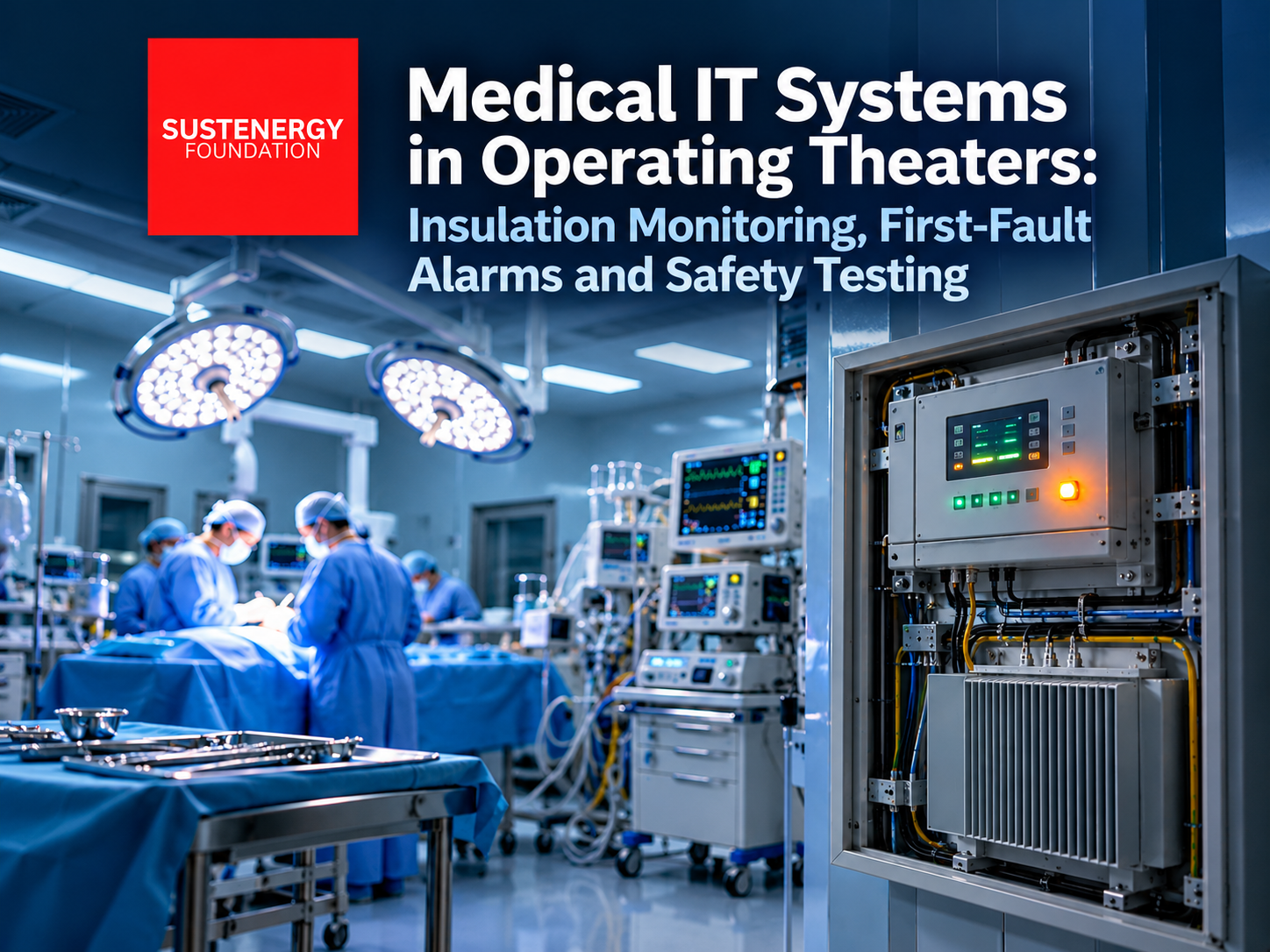
Operating theaters depend on a reliable and uninterrupted electrical supply. From anaesthesia workstations and patient monitoring systems to electrosurgical units and life-support equipment, multiple medical devices must function safely throughout a surgical procedure.
Even a minor electrical fault can create a serious risk when medical equipment is being used in close proximity to patients. This makes hospital electrical safety a critical part of operating theater management.
One of the key safety measures used in designated critical medical locations is the medical IT system. Designed to support continuity of power while providing continuous insulation monitoring, this system helps hospitals identify electrical faults before they develop into more serious hazards.
Understanding how medical IT systems, insulation monitoring devices and first-fault alarms work is essential for hospital electrical engineers, biomedical engineers, facility managers and electrical safety professionals.
What Is a Medical IT System in an Operating Theater?
A medical IT system is a specialised electrical distribution arrangement used in designated medical locations where an interruption to the electrical supply could endanger patients. It is commonly associated with Group 2 medical locations, including operating theaters and certain critical care areas, subject to the applicable classification and installation requirements.
In a medical IT system, an isolation transformer separates the secondary electrical circuit from earth. Exposed conductive parts are connected to the protective earthing system, while an insulation monitoring device continuously supervises the isolated circuit.
Unlike conventional earthed distribution systems, a correctly designed medical IT system can generally continue supplying power after the first insulation fault, provided the system remains within its permitted operating conditions and safety requirements.
This is particularly important in operating theaters, where an unexpected power interruption could affect medical equipment during surgery.
However, continued operation does not mean the fault can be ignored. The first insulation fault must be investigated and corrected promptly to reduce the risk of a second fault creating a hazardous condition.
How Does an Insulation Monitoring Device (IMD) Work?
An insulation monitoring device (IMD) is a key component of medical IT system safety. It continuously monitors the insulation condition between the isolated live conductors and earth, helping maintenance teams identify deterioration before it becomes a serious electrical safety concern.
Insulation resistance can deteriorate for several reasons, including:
- Damaged or ageing electrical cables.
- Moisture ingress into electrical equipment or installations.
- Deteriorating insulation in connected medical devices.
- Accumulation of insulation faults across multiple connected loads.
- Defects arising from equipment damage, maintenance activities or environmental conditions.
When the insulation resistance falls below the configured alarm threshold, the IMD activates an alarm to alert hospital personnel.
This early warning allows the electrical maintenance or biomedical engineering team to investigate the affected circuit, identify the source of the deterioration and arrange corrective action.
For effective operating theater electrical safety, the IMD must be suitable for medical IT applications, correctly installed and configured, and tested in accordance with the manufacturer’s instructions and applicable standards.
First-Fault Alarm: Why Hospitals Must Never Ignore It
One of the most important features of a medical IT system is its first-fault alarm.
When the insulation monitoring device detects the first insulation fault, it provides an audible and visual warning. Under the intended operating conditions, the electrical supply can generally continue without immediate interruption, allowing a critical procedure to proceed while the fault is assessed.
The alarm provides an opportunity to address the problem before another fault creates a potentially dangerous situation.
For this safety arrangement to work effectively, hospitals should ensure that:
- Audible and visual alarms are functional and clearly identifiable.
- Alarm indicators are positioned where the responsible staff can recognise them promptly.
- Electrical maintenance and biomedical engineering teams know how to respond to an alarm.
- A documented procedure exists for investigating and rectifying the fault.
- Faults, corrective actions and retesting are recorded for future reference.
A first-fault alarm should never be treated as a routine warning that can be ignored. If a second insulation fault occurs on another live conductor, a hazardous fault-current path may develop, potentially resulting in protective-device operation, equipment disruption or an electrical shock risk.
A prompt response to the first alarm is therefore essential for maintaining hospital electrical safety and reducing the likelihood of an unexpected interruption during surgery.
Electrical Safety Testing for Medical IT Systems
Installing a medical IT system is only the first step. Regular inspection, functional testing and preventive maintenance are necessary to ensure that the system continues to provide the intended level of protection.
Hospitals should establish a documented testing programme based on the applicable requirements of IEC 60364-7-710, relevant Indian standards and regulations, manufacturer instructions, and the installation’s design and risk assessment.
The following checks should be considered as part of a suitably planned medical IT system inspection.
1. Isolation Transformer Inspection
Verify the isolation transformer’s ratings, installation condition, protective arrangements and suitability for the intended medical location. Check for visible damage, overheating, abnormal noise and other signs that may require further investigation.
2. Protective Earthing and Equipotential Bonding
Check protective-conductor continuity and the integrity of supplementary equipotential bonding, where required. These measures help limit dangerous potential differences between exposed and extraneous conductive parts in critical medical environments.
3. Insulation Monitoring Device Functional Test
Verify that the IMD operates correctly and responds as intended to its test function and simulated fault conditions, following the manufacturer’s prescribed procedure. Confirm that the configured alarm threshold and associated indications are appropriate for the installation.
4. Audible and Visual Alarm Verification
Test the alarm indicators and audible warning functions to confirm that they operate correctly. Where remote alarm panels are installed, verify their functionality and ensure that alarm information reaches the intended personnel.
5. Electrical Circuit and Equipment Assessment
Inspect the condition of relevant wiring, connections and connected equipment. Perform insulation-related or other electrical tests only where appropriate to the system design and the equipment manufacturer’s requirements.
Testing should be planned carefully to avoid damaging sensitive medical equipment, creating unsafe conditions or unnecessarily disrupting clinical services.
6. Test Records and Corrective Actions
Maintain records of inspections, test results, identified defects, corrective measures and subsequent verification. These records support maintenance planning, audit readiness and the ongoing management of electrical risks in hospitals.
All testing should be carried out by competent personnel using suitable instruments and procedures, with coordination between electrical maintenance, biomedical engineering and clinical teams.
Common Medical IT System Safety Issues in Hospitals
During hospital electrical safety inspections, several issues may require attention. These include malfunctioning insulation monitoring devices, defective alarm indicators, inadequate maintenance records, deterioration of electrical insulation and deficiencies in protective earthing or equipotential bonding.
Other concerns may include incorrect alarm settings, a lack of staff awareness regarding first-fault alarms and delays in investigating recurring insulation faults.
Identifying these issues early helps hospitals plan corrective actions and improve the reliability of critical electrical infrastructure.
A comprehensive hospital electrical safety audit can help assess the condition of electrical installations, review maintenance practices and identify potential gaps in the management of critical medical locations. The audit scope should reflect the applicable standards, site conditions and specific risks associated with the facility.
Standards and Compliance for Operating Theater Electrical Safety
Medical IT systems must be designed, installed, commissioned and maintained in accordance with the standards and regulations applicable to the facility.
IEC 60364-7-710 addresses electrical installations in medical locations, including requirements relevant to medical IT systems in designated areas. In India, the applicable national standards, Central Electricity Authority regulations and other relevant statutory requirements should also be considered, as appropriate to the installation.
Hospitals should verify the current editions, applicable clauses and local requirements before finalising inspection or testing procedures. Compliance should be assessed against the requirements relevant to the medical location, rather than relying on a generic checklist alone.
How Hospitals Can Improve Medical IT System Reliability
A reliable medical IT system depends on more than equipment selection. It requires an organised approach to electrical safety management.
Hospitals can strengthen their electrical safety practices by:
- Scheduling periodic inspections and functional testing.
- Maintaining clear procedures for responding to first-fault alarms.
- Training electrical and biomedical engineering personnel to recognise and investigate alarms.
- Recording recurring faults and analysing their causes.
- Coordinating maintenance activities with clinical teams.
- Maintaining updated electrical drawings, equipment records and test documentation.
- Engaging qualified electrical safety professionals when specialised assessments are required.
These practices help reduce avoidable electrical risks while supporting the continuity of critical medical services.
Conclusion
Medical IT systems play an important role in operating theater electrical safety by supporting continuity of power and providing early warning of insulation deterioration. Isolation transformers, insulation monitoring devices and first-fault alarms work together to help hospitals identify electrical problems before they develop into more serious hazards.
However, the effectiveness of this protection depends on correct installation, functional alarms, periodic safety testing and prompt corrective action.
For hospitals, maintaining a reliable medical IT system should be part of a wider electrical safety management programme that includes competent personnel, documented maintenance procedures and regular reviews of critical electrical infrastructure.
A dependable medical IT system is not simply an installation requirement. It is an essential part of protecting patients, supporting clinical teams and maintaining electrical safety in operating theaters.
At Hospital Electrical Safety, our focus is on improving awareness of electrical risks in healthcare environments and supporting safer, more reliable hospital electrical infrastructure through informed inspection, testing and preventive maintenance practices.