
A Wake-Up Call for Healthcare Facilities Across India
The recent hospital fire in Muzaffarpur, Bihar, has once again highlighted the devastating consequences of electrical hazards in healthcare facilities. Hospitals are environments where uninterrupted power supply and electrical safety are critical for patient survival. Even a minor electrical fault can escalate into a major disaster when critical care equipment, oxygen systems, and vulnerable patients are involved.
The tragic incident serves as a stark reminder of why every healthcare facility must prioritize a comprehensive electrical safety audit for hospitals and implement corrective actions without delay.
What Happened?
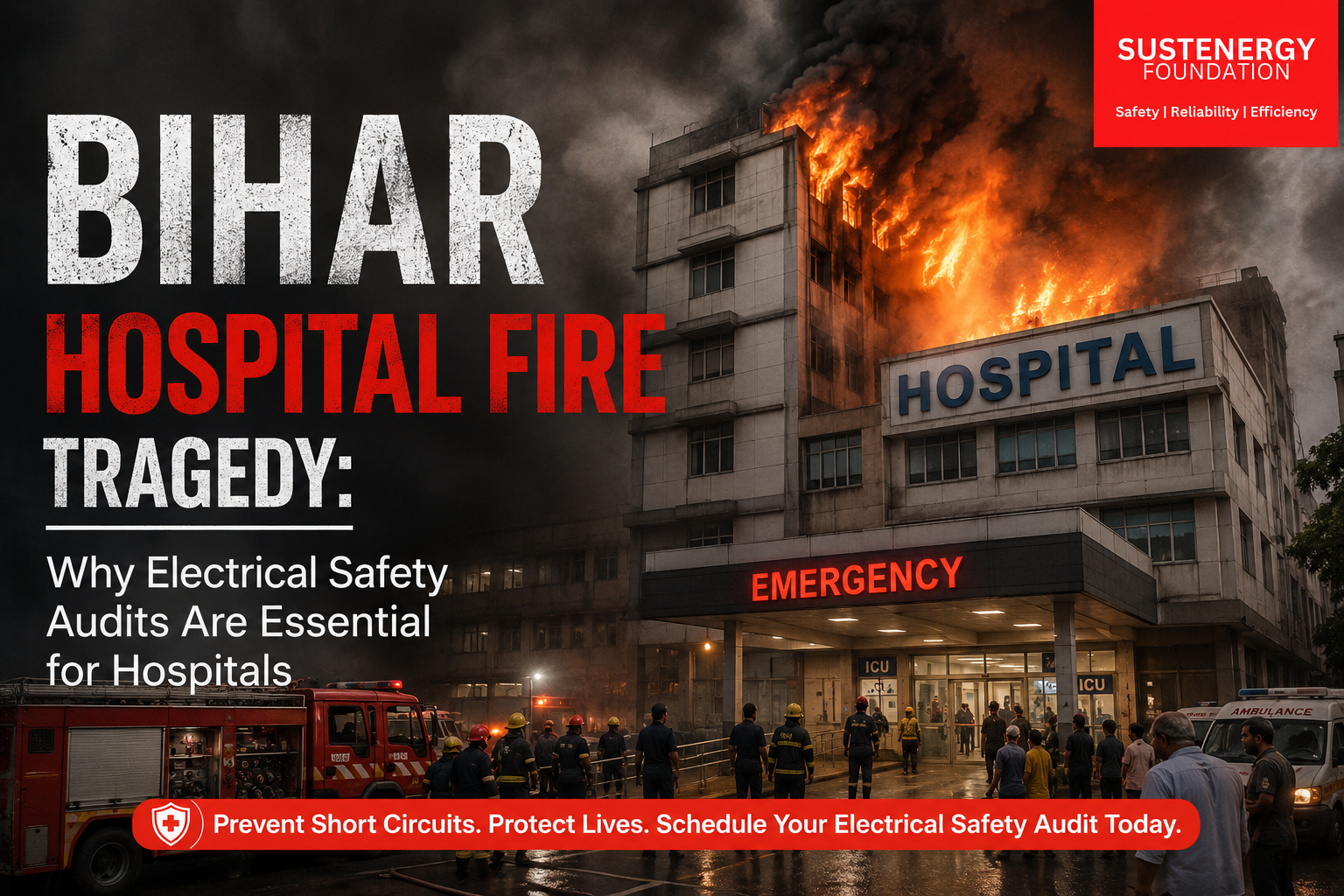
In the early hours of June 3, 2026, a devastating fire broke out in the Intensive Care Unit (ICU) of a private hospital located in Brahmapura, Muzaffarpur, Bihar. The fire originated on the fifth floor, where nearly 20 critically ill patients were receiving treatment.
Within minutes, thick toxic smoke engulfed the ICU, creating panic among patients, medical staff, and visitors. Emergency responders rushed to the scene with multiple fire tenders while hospital personnel initiated emergency evacuation procedures.
Several critically ill patients had to be shifted to nearby hospitals, and reports confirmed multiple fatalities and injuries. The incident has become one of the most serious hospital fire accidents reported in Bihar in recent years.
How Did the Fire Start?
Preliminary investigations indicate that the fire was likely caused by a short circuit in the ICU ward.
Electrical faults in hospitals can become particularly dangerous because of:
- Continuous operation of critical medical equipment
- High electrical load concentrations in ICU areas
- Presence of oxygen-rich environments
- Flammable furnishings and medical consumables
- Aging electrical infrastructure
- Poor maintenance of electrical systems
When the electrical fault occurred, sparks ignited nearby materials, causing the fire to spread rapidly. Toxic smoke quickly filled the ward, creating life-threatening conditions for patients dependent on ventilators and other life-support systems.
A routine hospital fire safety electrical audit could have identified potential electrical deficiencies before they developed into a catastrophic event.
The Impact
The Bihar hospital fire resulted in:
- Multiple patient fatalities
- Critical injuries among patients
- Emergency evacuation of approximately 20 patients
- Significant damage to hospital infrastructure
- Interruption of critical healthcare services
- Public concern regarding hospital safety standards
Beyond the immediate loss of life, such incidents severely impact the reputation of healthcare institutions and expose hospitals to legal, regulatory, and financial consequences.
Why Hospitals Are Highly Vulnerable to Electrical Fires
Healthcare facilities operate some of the most complex electrical systems found in commercial buildings. These systems support:
- Intensive Care Units (ICUs)
- Operation Theatres
- Diagnostic Equipment
- Ventilators
- Medical Gas Systems
- Data Centers
- Emergency Power Systems
Any failure in these systems can directly affect patient safety.
Regular electrical audit for healthcare facilities helps identify hidden hazards such as:
- Overloaded circuits
- Loose electrical connections
- Improper earthing
- Voltage fluctuations
- Deteriorated insulation
- Harmonic distortions
- Thermal hotspots in switchboards
The Role of NABH Electrical Safety Audits
Healthcare organizations seeking NABH accreditation are expected to maintain safe and reliable electrical infrastructure.
A comprehensive NABH electrical safety audit evaluates:
- Compliance with NABH standards
- Electrical system reliability
- Earthing effectiveness
- Backup power readiness
- Fire safety measures
- Preventive maintenance practices
- Electrical risk assessment
Hospitals that conduct periodic audits significantly reduce the probability of electrical failures and fire incidents.
Importance of Thermography Inspections
Thermography has become one of the most effective predictive maintenance tools for hospitals.
Infrared thermal imaging can detect:
- Overheated electrical connections
- Loose terminals
- Unbalanced electrical loads
- Failing circuit breakers
- Transformer hotspots
These issues often remain invisible during normal inspections but can be detected early through thermal scanning.
Combining thermography with a hospital electrical safety audit India program provides a proactive approach to risk mitigation.
Electrical Safety Audits: A Critical Investment, Not an Expense
Many hospital management teams view electrical audits as a compliance requirement rather than a patient safety necessity.
However, regular electrical safety audit for hospitals delivers multiple benefits:
- Prevention of electrical fires
- Improved patient safety
- Reduced equipment failures
- Enhanced operational reliability
- Compliance with NABH requirements
- Reduced maintenance costs
- Better energy efficiency
When combined with hospital energy audit services India, healthcare facilities can improve both safety and energy performance simultaneously.
Lessons from the Bihar Hospital Fire
The Bihar tragedy underscores several critical lessons for healthcare administrators:
- Electrical systems require periodic professional assessment.
- Preventive maintenance is more effective than reactive repairs.
- ICU areas need enhanced electrical monitoring.
- Emergency response systems must be regularly tested.
- Fire prevention strategies should include electrical risk management.
- Compliance audits alone are not enough; corrective actions must be implemented promptly.
Conclusion
The Muzaffarpur hospital fire is a painful reminder that electrical safety cannot be overlooked in healthcare facilities. Every hospital, regardless of size, should conduct an annual hospital electrical safety audit and implement corrective measures identified during the assessment.
Patient lives depend on the reliability and safety of hospital electrical systems. A proactive approach today can prevent a tragedy tomorrow.
Healthcare institutions must prioritize regular electrical safety audits, thermography inspections, NABH electrical safety audits, hospital fire safety electrical audits, and hospital energy audit services to create safer healing environments for patients and healthcare professionals alike.