
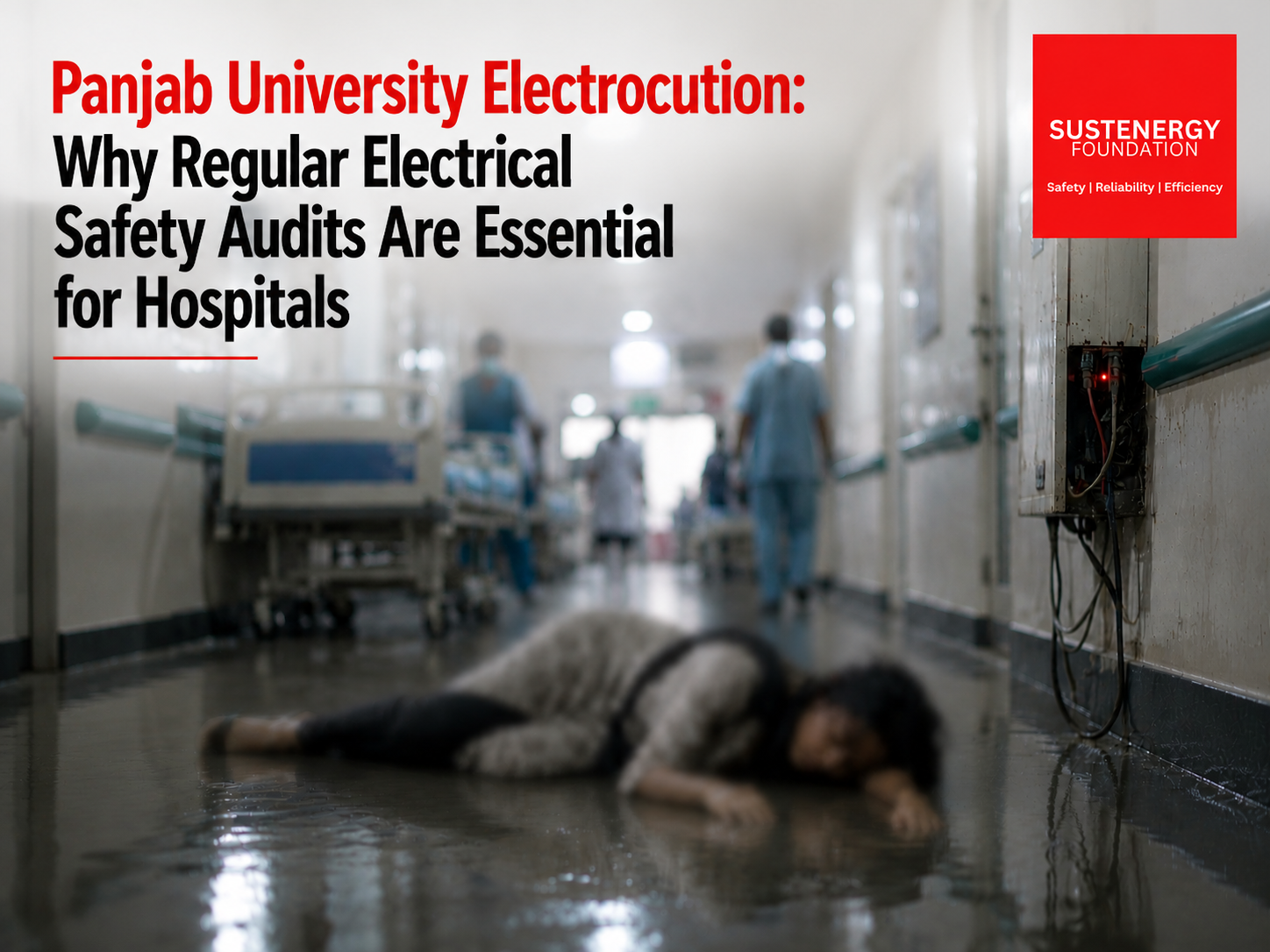
The tragic electrocution of a young PhD scholar at Panjab University has shocked the nation. According to media reports, the scholar was walking from her hostel to the academic department during heavy rainfall when she came into contact with a live electrical current in a waterlogged area. Initial investigations suggest that electricity may have leaked from an electrical junction box or nearby electrical installation, although authorities are still investigating the exact cause.
This heartbreaking incident reminds us that electrical hazards are often silent, invisible, and can become deadly within seconds.
While this accident occurred on a university campus, it raises an important question for hospitals:
Could a similar incident happen in a healthcare facility?
Hospitals welcome thousands of patients, visitors, doctors, nurses, and support staff every day. During the monsoon season, outdoor electrical installations become even more vulnerable. Without proper maintenance and regular hospital electrical safety audits, the consequences can be devastating.
Why Hospitals Must Take Electrical Safety Seriously
Unlike most commercial buildings, hospitals operate 24 hours a day, 365 days a year.
Inside every hospital are people who may not be able to react quickly to danger:
- Patients recovering from surgery
- Elderly visitors
- Children
- ICU patients
- People on wheelchairs
- Patients connected to life-support equipment
A small electrical fault that may seem insignificant in another building could become life-threatening in a hospital.
This is why electrical safety is directly linked to patient safety.
Electrical Hazards Are Usually Invisible
One of the biggest challenges with electrical accidents is that they often give no warning signs.
A damaged cable hidden underground, moisture entering a junction box, a loose electrical connection, or a failed earthing system may continue to function normally—until someone unknowingly comes into contact with it.
Heavy rain and waterlogging only make these risks worse.
During our hospital electrical safety audits, we frequently identify outdoor electrical defects such as:
- Water entering electrical junction boxes
- Damaged outdoor distribution boards
- Missing cable glands
- Corroded electrical panels
- Exposed live conductors
- Broken earthing conductors
- Loose electrical connections
- Poor protection against accidental contact
These issues may appear minor, but under wet conditions, they can create extremely dangerous situations.
Areas Around Hospitals That Need Special Attention
Most people think of hospital electrical systems as being limited to operation theatres, ICUs, or electrical rooms.
However, many serious electrical hazards develop outside the building.
Facility managers should regularly inspect:
- Walkways connecting hospital blocks
- Ambulance parking bays
- Visitor parking areas
- Garden lighting systems
- Outdoor pump rooms
- Electrical kiosks
- Utility corridors
- Generator yards
- Temporary electrical installations
- Waterlogged pathways near electrical equipment
These are areas where staff, patients, and visitors move every day.
Common Problems Found During Hospital Electrical Safety Audits
Over the years, electrical safety audits in hospitals across India have revealed several recurring issues.
1. Damaged Outdoor Junction Boxes
Rainwater enters through cracked covers, broken hinges, or missing rubber seals, creating the possibility of live electrical leakage.
2. Poor Earthing Systems
A weak or damaged earthing system may fail to safely divert fault current, allowing dangerous touch voltages to remain on equipment surfaces.
3. Missing or Faulty RCCBs
Residual Current Circuit Breakers (RCCBs) are designed to disconnect power quickly during an earth fault.
Unfortunately, audits often reveal:
- Missing RCCBs
- Incorrectly rated RCCBs
- RCCBs bypassed due to nuisance tripping
- RCCBs that no longer operate correctly
Without functioning RCCBs, the risk of electric shock increases significantly.
4. Weather-Damaged Distribution Boards
Outdoor electrical panels exposed to sunlight, rain, and humidity gradually deteriorate if they are not maintained properly.
Corrosion, broken enclosures, and moisture ingress can all increase electrical risk.
5. Lack of Preventive Maintenance
Electrical systems naturally age.
Loose terminals, deteriorating insulation, overheating connections, and moisture damage often remain unnoticed until a failure or accident occurs.
Regular preventive maintenance helps identify these issues before they become dangerous.
How a Hospital Electrical Safety Audit Helps Prevent Accidents
A professional hospital electrical safety audit goes far beyond a routine inspection.
It is a systematic evaluation of the hospital’s electrical infrastructure to identify hidden risks before they lead to injury, fire, equipment failure, or power outages.
A comprehensive audit generally includes:
- Visual inspection of electrical installations
- Thermal imaging to detect overheating connections
- Earthing resistance verification
- Earth Fault Loop Impedance (EFLI) testing
- RCCB functional testing
- Inspection of outdoor electrical panels
- Junction box condition assessment
- Lightning protection system evaluation
- Emergency electrical isolation verification
- Review of preventive maintenance records
By identifying hidden defects early, hospitals can take corrective action before an incident occurs.
Electrical Safety Is More Than Compliance
Many hospitals conduct inspections only to meet statutory or accreditation requirements.
However, true electrical safety goes beyond compliance.
Electrical installations continue to age, environmental conditions change, and equipment undergoes wear and tear throughout its lifecycle.
Without periodic inspection and testing, today’s compliant installation may become tomorrow’s hazard.
Just as hospitals prioritise infection control, fire safety, and emergency preparedness, electrical safety audits should form a core part of every hospital’s patient safety strategy.
Lessons from the Panjab University Incident
The investigation into the Panjab University electrocution is still ongoing, and authorities will determine the exact cause in due course.
However, one lesson is already clear:
Electrical infrastructure exposed to rain, public access, and continuous use requires regular inspection and maintenance.
Hospitals cannot eliminate every risk, but they can significantly reduce the possibility of electrical accidents through:
- Scheduled electrical safety audits
- Preventive maintenance
- Periodic testing of RCCBs
- Earthing inspections
- Thermal imaging surveys
- Immediate rectification of identified defects
Every junction box inspected, every earthing fault corrected, and every protective device tested could help prevent the next accident.
Final Thoughts
Electrical accidents rarely happen without warning—they happen because hidden defects remain unnoticed for too long.
The tragic loss of a young scholar at Panjab University is a reminder that electrical safety should never be taken for granted.
For hospitals, where every second matters and every life is precious, investing in regular hospital electrical safety audits is not just about protecting electrical systems—it is about protecting patients, healthcare workers, visitors, and the community.
A safe hospital begins with a safe electrical infrastructure.