
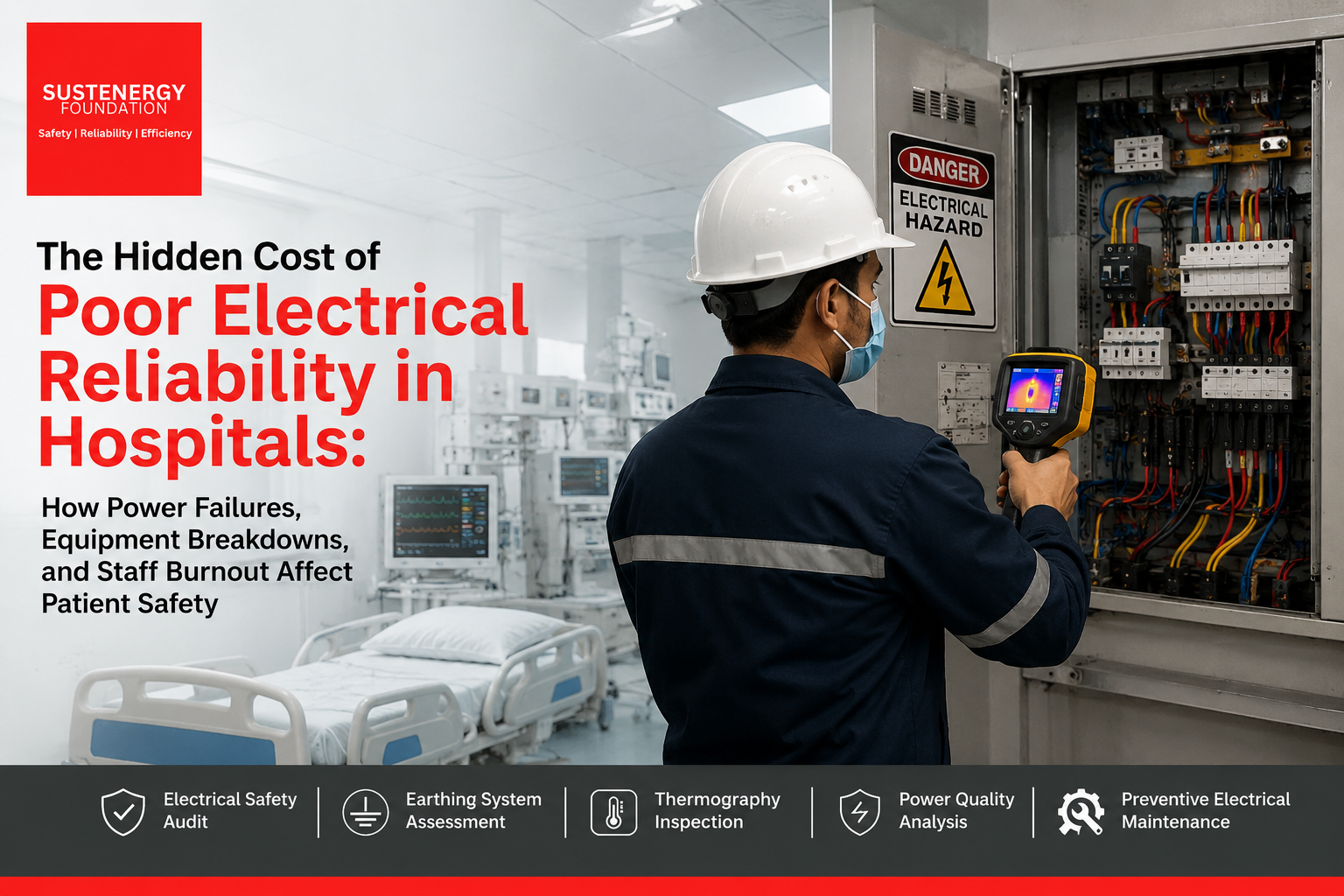
Hospitals are built on trust. Every patient who enters a healthcare facility believes that doctors, nurses, medical equipment, and life-support systems will function without interruption. However, behind many modern healthcare facilities lies a silent but serious risk — poor electrical reliability.
Across healthcare facilities in India, hospitals continue to experience voltage fluctuations, overloaded circuits, earthing failures, backup power issues, and recurring equipment shutdowns. These are not merely technical inconveniences; they directly affect patient safety, operational continuity, staff confidence, and the overall quality of healthcare delivery. This is why a professional Electrical safety audit in India is no longer optional for healthcare institutions aiming to maintain safe and uninterrupted operations.
In highly sensitive areas such as ICUs, Operating Theatres, NICUs, Cath Labs, and emergency departments, even a few seconds of electrical instability can create confusion, treatment delays, equipment malfunction, and immense pressure on healthcare professionals. Modern hospitals rely entirely on stable and reliable electrical systems, yet many institutions still treat electrical safety as a routine compliance activity instead of recognizing it as a core patient safety requirement. A comprehensive electrical safety audit for hospitals helps healthcare facilities identify hidden infrastructure risks before they turn into critical incidents.
The Human Impact of Electrical Failures
The effects of poor electrical infrastructure extend far beyond machines and cables. They create stress and uncertainty for the people responsible for saving lives every day.
Doctors performing surgeries during sudden voltage disturbances or power interruptions face increased mental fatigue and a higher risk of procedural complications. Nurses working in critical care areas are constantly exposed to repeated ventilator alarms, UPS transitions, and unexpected equipment resets, which gradually reduce concentration and increase workplace anxiety. Biomedical engineers often spend most of their time responding to repeated breakdowns instead of focusing on preventive maintenance and system improvement. Maintenance teams also experience continuous operational pressure due to recurring emergency calls and unresolved infrastructure issues.
Over time, hospitals begin to normalize these failures. What should be treated as a major warning sign slowly becomes part of everyday operations. This culture of accepting repeated electrical disturbances is one of the biggest hidden threats in healthcare infrastructure today. A structured hospital electrical safety audit helps organizations move away from reactive maintenance and toward preventive reliability management.
Financial Losses Caused by Poor Power Quality
Unstable electrical systems not only affect patient care but also create significant financial losses for hospitals.
Voltage imbalance, harmonics, and improper earthing can drastically reduce the lifespan of critical medical equipment such as MRI systems, ventilators, CT scanners, anesthesia workstations, and laboratory analyzers. Frequent transient surges and neutral faults lead to unexpected shutdowns, expensive repairs, and replacement costs. Poorly maintained UPS systems may fail during critical procedures, putting both patient safety and hospital reputation at risk.
Many hospitals spend enormous amounts annually on repeated equipment repairs without identifying the actual root cause — poor electrical infrastructure. This is why services such as hospital UPS power audit, hospital earthing system audit, and medical equipment electrical safety testing are becoming increasingly important for healthcare facilities seeking long-term operational stability.
Moving Beyond Reactive Maintenance
India’s healthcare sector must transition from a reactive “breakdown management” approach to a proactive reliability-focused strategy. Hospitals can no longer afford to wait for failures before taking corrective action.
A modern NABH electrical safety audit should include detailed assessments such as infrared thermography for hotspot detection, leakage current analysis, earth fault loop impedance testing, UPS load validation, emergency generator reliability testing, and electrical fire risk assessments. These preventive measures help identify hidden faults before they escalate into dangerous failures or fire hazards.
Similarly, a dedicated hospital thermography electrical audit enables hospitals to identify overheating panels, loose electrical connections, overloaded circuits, and abnormal temperature rise in electrical systems without interrupting hospital operations. Preventive thermal inspections play a critical role in avoiding electrical fires and equipment failures in critical healthcare environments.
Under NABH 6th Edition standards, electrical safety is no longer viewed solely as an engineering responsibility. It is now directly connected to patient safety, risk management, operational continuity, and healthcare quality assurance. This makes regular hospital fire safety electrical audit programs essential for maintaining compliance and ensuring safe healthcare environments.
Strengthening Critical Care Infrastructure
Critical care departments require specialized attention because even minor electrical failures can have life-threatening consequences. Areas such as intensive care units and operating theatres demand uninterrupted power quality and reliable protection systems.
An advanced ICU electrical safety audit helps hospitals evaluate backup power systems, isolation transformers, leakage currents, earthing performance, and critical load reliability within intensive care areas. Likewise, ensuring OT electrical safety compliance is essential for maintaining safe surgical environments and preventing risks associated with electrical leakage or unstable power supply during procedures.
Hospitals should also conduct regular RCCB testing in hospitals to ensure that residual current protection devices function properly during electrical fault conditions. Failure of protective devices during leakage or short-circuit situations can expose patients, staff, and sensitive medical equipment to serious hazards.
Building a Safer Healthcare Future
Electrical reliability is not an engineering luxury — it is the foundation of safe healthcare delivery. Hospitals that ignore electrical infrastructure risks today may eventually face equipment failures, operational disruptions, electrical fire incidents, compliance issues, financial losses, and damage to institutional reputation.
On the other hand, hospitals that invest in preventive maintenance, infrastructure modernization, energy optimization, and comprehensive electrical audit for healthcare facilities will build safer and more resilient healthcare environments for both patients and medical professionals.
Sustenergy Foundation believes that healthcare infrastructure should support uninterrupted patient care, reduce operational stress, and create safer working environments for doctors, nurses, biomedical engineers, and maintenance teams. The goal of a professional Electrical safety audit is not merely compliance — it is to build hospitals where safety, reliability, and patient trust remain uncompromised.